
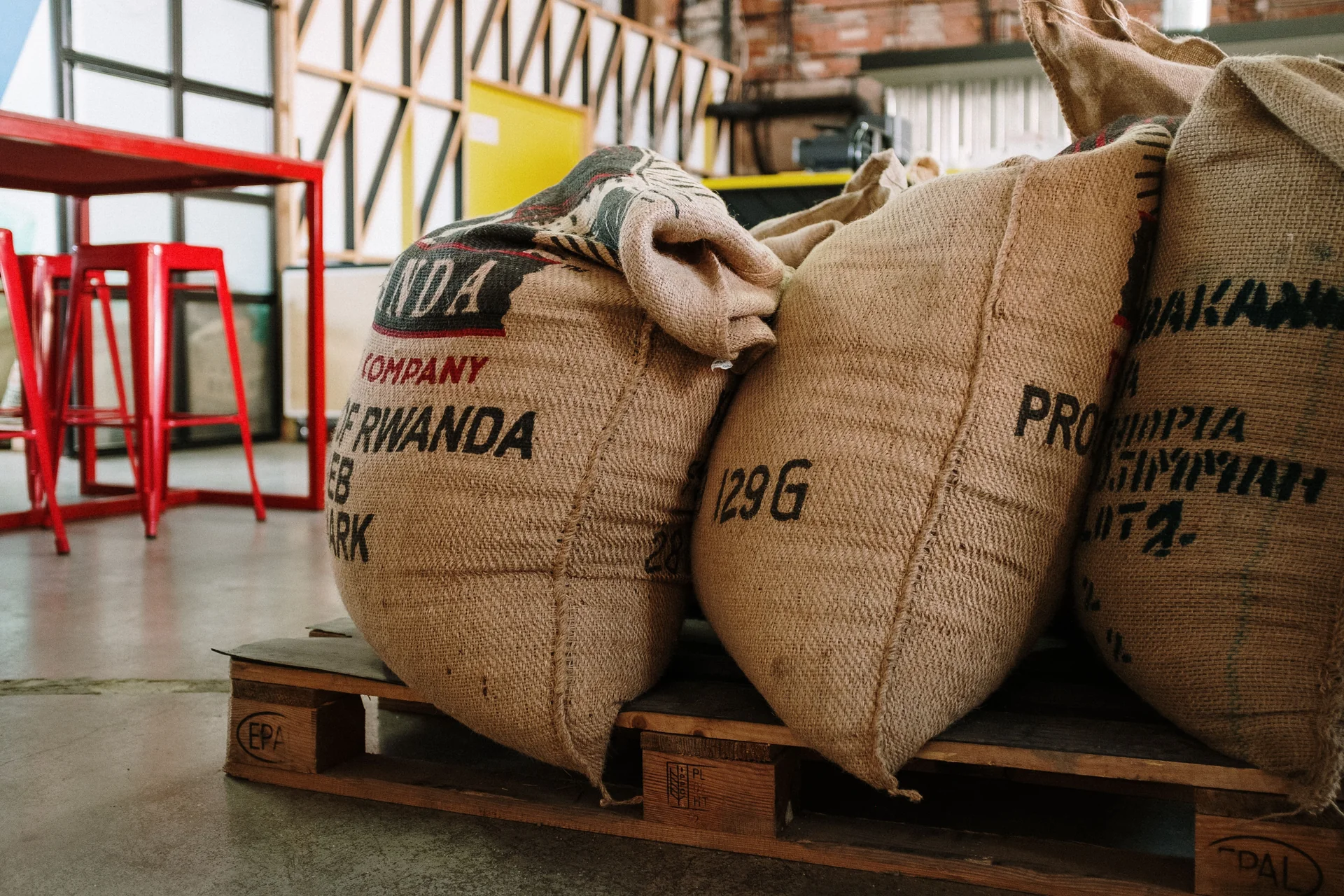
Crop Centre-Based Machinery Rental & Tractorization
A proof of concept supported by Mitsubishi Corporation to test shared agricultural mechanisation services, tractor rental, and mechanized land preparation for smallholder clusters around the Kawo Crop Centre in Nasarawa State.
100+ Ha
Land Mechanized
Ploughing, harrowing & planting
40%
Time Saved in Land Prep
Compared to manual hoe tillage
1
Dedicated Crop Hub Base
Kawo Crop Centre, Nasarawa
0%
Equipment Default Rate
Supervised operator management
MITSUBISHI-SUPPORTED MACHINERY RENTAL PROOF OF CONCEPT | NIGERIA | 2021-2023
Smallholder Mechanisation Services Project
Testing a Crop Centre-based machinery rental service for smallholder farmers in and around Kawo, Nasarawa State
Public review draft. The project demonstrated substantial demand and delivered machinery services, but fulfilment, reliability and cost recovery were constrained. Productivity, labour-saving and long-term livelihood claims remain unverified and are not presented as established impact.
“Demand was clear; the operating system had to catch up with it.”
Zowasel case-study evidence finding
| 1,104 harequested in 2022project-reported demand | 248.9 hamechanised in 2022project-reported delivery |
|---|---|
| 22.5%hectare fulfilmentcalculated from reported figures | 5local jobs reportedroles and duration not fully reconciled |
1,104 ha
requested in 2022
project-reported demand
248.9 ha
mechanised in 2022
project-reported delivery
22.5%
hectare fulfilment
calculated from reported figures
5
local jobs reported
roles and duration not fully reconciled
PROJECT PROFILE
1. Project at a glance#
- Project name
- Smallholder Mechanisation Services Project
- Public case-study title
- Testing a Crop Centre-based machinery rental service for smallholder farmers
- Lead implementer
- Zowasel
- Initiating and asset-support partner
- Mitsubishi Corporation Nigeria; the project began through a GrowS.E.L Microfunds donation request and partnership arrangement
- Other delivery partners
- GrowS.E.L Microfunds Inc.; Standage; Honda Manufacturing Nigeria; participating communities and cooperatives
- Target customers and beneficiaries
- Smallholder farmers and cooperatives producing rice, soybean, sesame and maize; service buyers needing land preparation, planting or harvesting support
- Country
- Nigeria
- State / region
- Kawo village, Doma Local Government Area, Nasarawa State, with selected service assignments beyond Kawo
- Department
- Value Chain Department, working with Programmes, Agronomy, Supply Chain and Marketplace teams
- Technology deployed
- Kawo Crop Centre / farm kiosk, tractor, combine harvester, two rice planters, Honda handheld tiller, platform scale, booking and payment workflows, Zowasel Marketplace; ACESS later supported finance-related continuity
- Duration
- Concept and donation request: November-December 2021; launch: 23 March 2022; reviewed operating reports extend through 2023. Formal closure date is not verified.
- Runtime
- Approximately 21 months from launch through December 2023 in the reviewed evidence; formal project runtime requires management confirmation
- Budget
- No single audited project budget was found. Kawo Crop Centre development records show NGN 6,885,150 received/budgeted and NGN 10,244,960 actual cost. An insurance schedule lists NGN 18,158,518.80 total insured asset value. These figures overlap and must not be added.
- Program Manager
- To be confirmed by Zowasel management for public release
- Supervisor
- To be confirmed by Zowasel management for public release
- Last updated
- 28 August 2026
GrowS.E.L Microfunds Inc., Mitsubishi Corporation Nigeria and Zowasel had distinct roles. The records support describing GrowSEL as the nonprofit requester and donation recipient, Mitsubishi as the initiating asset-support partner and Zowasel as the field implementer and service operator.
Executive summary
Smallholder farmers often prepare, plant and harvest land with limited machinery access. Individual ownership is unaffordable for many farmers, while fragmented plots, seasonal demand, poor roads, limited repair networks and scarce working capital make rural hire services difficult to operate. The Smallholder Mechanisation Services Project tested whether a local Crop Centre could aggregate demand and rent machinery to farmers on a pay-per-use basis.
The initiative began with a 2021 request by GrowS.E.L Microfunds for agricultural machinery and farm kiosks from Mitsubishi Corporation Nigeria. Zowasel implemented the service at the Kawo Crop Centre in Doma LGA, which was commissioned on 23 March 2022. The asset set included a tractor, combine harvester, two rice planters, a handheld tiller and service infrastructure. Zowasel used the Crop Centre, community trustees, cooperatives, booking and payment processes, agronomy support and its Marketplace to organise demand and connect farmers with wider value-chain services.
The strongest project-level evidence is for demand and service output. The 2022 annual report records 369 booking requests covering 1,104 hectares from 169 farmers and 248.9 hectares actually mechanised. This is an estimated 22.5% fulfilment of requested hectares. A separate annual ledger records NGN 2.883 million revenue against NGN 7.854 million expenses, leaving a NGN 4.971 million deficit and 36.7% cost recovery. Project reports also describe repeated breakdowns, 25 downtime days, unsuitable planter-market fit, scarce spare parts and technicians, seasonal idling and a destructive fire incident involving the combine harvester.
The project reported five local people employed and trained five women to operate a handheld tiller. The records do not provide a reconciled employment register, job duration, workdays or income. They also do not provide a defensible baseline and endline for yield, labour cost, household income, drudgery, food security, soil condition or emissions. An internal claim of 40% productivity improvement and 35% labour-cost savings is therefore treated as unverified.
The case study's overall judgement is high relevance and clearly demonstrated demand, partial effectiveness, weak operating efficiency and unverified long-term impact. The model remains promising if future delivery is redesigned around machinery quality, preventive maintenance, local spare-parts and technician capacity, service-density economics, inclusive finance, safety and conflict controls, and a much stronger monitoring system.
The project proved that farmers sought local machinery services and that Zowasel could organise a Crop Centre-based rental operation. It did not yet prove a reliable, cost-covering or impact-verified business model. Public claims should foreground the learning value of the proof of concept.
CONTEXT AND DESIGN
2. Context#
Timely land preparation and harvesting can determine whether a smallholder captures the available rains, avoids crop loss and reaches a buyer at the right time. Yet machinery ownership has high capital and maintenance costs, and commercial providers may avoid dispersed rural customers whose plots are small, access roads are poor and payment capacity is uncertain. The project addressed this access gap through shared assets and an organised local service point rather than farmer ownership.
The concept positioned the Crop Centre as more than a machinery depot. It was intended to bring booking, agronomy, input and market information closer to farmers and to use Zowasel's farmer and transaction data to make rental decisions. This made mechanisation one component of a wider value-chain model: production support was connected to demand aggregation, payment, market linkage and, later, alternative credit evaluation.
FAO and IITA materials reviewed for context support the relevance of organised agricultural hire services, local operator capability and service-platform models. They are contextual sources and do not validate this project's results.
3. Theory of change#
Provide shared assets
Place appropriate, serviceable machinery and a farm kiosk close to smallholder production clusters.
Aggregate and qualify demand
Use Crop Centre staff, trustees, cooperatives and farmer records to group plots, check readiness and schedule bookings.
Deploy and maintain
Operate machines safely, collect payment, track hectares and hours, and provide rapid preventive and corrective maintenance.
Link the value chain
Combine mechanisation with agronomy, Marketplace access and, where appropriate, ACESS-supported finance pathways.
Improve farm operations
Increase timeliness, reduce drudgery and avoidable field losses, while managing the cost and quality of service.
Strengthen livelihoods
Translate reliable service into productivity, income, employment and community resilience without unacceptable environmental or social harm.
| CRITICAL ASSUMPTIONS The machinery must fit local cropping practices and soils; arrive in serviceable condition; have accessible parts, fuel and technicians; be deployed at sufficient density; operate safely in secure locations; remain affordable; and reach women and poorer farmers. The project evidence shows that several of these assumptions did not consistently hold. |
|---|
4. Objectives#
Test a shared agricultural-machinery rental service through a locally accessible Crop Centre.
Improve access to land-preparation, planting and harvesting equipment for smallholder farmers and cooperatives.
Use farmer, plot, booking and payment information to schedule and monitor service delivery.
Connect mechanisation with agronomy and guaranteed-market or buyer-linkage services through Zowasel's wider platform.
Assess effects on productivity, farm economics, disposable income, quality of life and the sustainability of the rental model over two crop seasons.
Develop a locally supported operating model involving community trustees, machine operators, booking agents and maintenance partners.
The 2021 design planned a one-year monitoring period covering two 2022 crop seasons. The reviewed records show operational reporting into 2023, but do not provide a formally approved revised results framework or closure report.
DELIVERY MODEL
5. Our approach#
| Workstream | Delivery approach | Observed implication |
|---|---|---|
| Local access point | Use Kawo Crop Centre as the booking, information, demonstration and dispatch point. | Reduced the distance between farmers and the service while creating a visible local point for enquiries. |
| Demand aggregation | Work with trustees, cooperatives and communities to identify bookings, cluster farms and confirm readiness. | High enquiry and booking demand was recorded, but many requested hectares could not be served. |
| Pay-per-use pricing | Charge tractor use by day, harvester use by hectare and the handheld tiller at an indicated daily rate; require payment before deployment. | Created a revenue pathway but exposed affordability, payment timing and idle-capacity constraints. |
| Payment controls | Accept bank transfer or deposit, POS, USSD and cash subsequently deposited into the account. | Supported rural access, but financial records and booking records need stronger reconciliation. |
| Community workforce | Use local trustees, operators and booking agents; reports describe commissions and daily fees. | Created paid roles, but unique jobs, duration and earnings were not fully documented. |
| Demonstrations | Demonstrate machinery, including women-focused handheld tiller trials. | Improved awareness and capability; adoption and paid use after demonstrations were not verified. |
| Market and finance links | Connect farmers through Zowasel Marketplace and later complementary ACESS-related finance activity. | Strengthened the service ecosystem; later finance activity must not be counted as a mechanisation output. |
| Partner ecosystem | Coordinate asset, maintenance and used-machinery actors through Mitsubishi, Standage, Honda and Zowasel roles. | Expanded technical options, although repair and spare-parts constraints persisted. |
6. Technology and assets deployed#
| Component | Documented role | Evidence boundary |
|---|---|---|
| Kawo Crop Centre / farm kiosk | Physical service point for bookings, enquiries, demonstrations and wider farmer support. | Building and operating costs are documented; attribution of all later programmes at the site to this project is not appropriate. |
| ISEKI tractor | Land preparation and other tractor-based services. | Highest booking demand, but repeated breakdowns and repair costs constrained delivery. |
| KUBOTA combine harvester | Harvesting service, including a wheat assignment and later rice deployment. | Delivered only 2.795 of a reported 200 allocated hectares on one assignment; later damaged beyond repair in a fire. |
| KUBOTA and YANMAR rice planters | Rice planting equipment included in the donated asset set. | Low adoption because local wet-season practice relied more on broadcasting or drilling; dry-season demonstrations were proposed. |
| Honda handheld tiller | Small-scale land preparation, with women-focused demonstrations and operator training. | Five women were reported trained; paid adoption, hectares and jobs were not verified. |
| Platform scale | Weighing and Crop Centre service support. | Included in the insurance schedule; project-specific use data were not found. |
| Marketplace | Buyer and crop-sales linkage intended to complement production services. | A supporting Zowasel platform; no reconciled project sales or price outcome was found. |
| ACESS | Later supporting layer for alternative credit evaluation and farm finance pathways. | Not the machinery project itself. Later Kawo finance results are reported only as continuity, not as mechanisation results. |
The insurance schedule lists the Crop Centre structure, platform scale, ISEKI tractor, KUBOTA combine harvester and two rice planters. The Honda tiller appears in operating and public records but not in that asset schedule.
7. Implementation timeline#
| Period | Milestone | Evidence status |
|---|---|---|
| Nov-Dec 2021 | Mechanisation concept prepared; GrowS.E.L Microfunds requested machinery and kiosks from Mitsubishi Corporation Nigeria. | Concept deck and dated request letter. |
| 23 Mar 2022 | Kawo Crop Centre commissioned and machinery rental proof of concept launched. | Internal launch records and public media coverage. |
| Mar-May 2022 | Booking, visitor and early service activity recorded; combine harvester experienced repeated failures during a wheat assignment. | Quarterly operating report. |
| Jun-Aug 2022 | Demand increased; service, revenue, breakdown, community outreach and local-employment figures reported. | Quarterly operating report and financial ledger. |
| Sep-Dec 2022 | Partner MoU publicised; annual activity compiled. A 1 December fire destroyed the combine harvester and a rice field during a reported conflict incident. | Annual report, incident and insurance records; public partner release. |
| Jan-Mar 2023 | Machines largely idle during the off-season; inspection and repair work continued. | Quarterly operating report. |
| Jun-Oct 2023 | Limited bookings and hectares fulfilled; handheld tiller demonstrations and women operator training reported. | Mechanisation operating report; internal denominators conflict. |
| 2024 onward | Public posts describe a second-phase collaboration and later Kawo activity involving ACESS, alternative credit scoring and other services. | Post-project continuity; not counted as 2021-2023 proof-of-concept results. |
PERFORMANCE AND EVIDENCE
8. Results#
| Results level | Defensible finding | Evidence status |
|---|---|---|
| Inputs | Crop Centre infrastructure, tractor, combine harvester, two rice planters, handheld tiller, scale and partner support were assembled. | Supported by asset, cost, public launch and operating records. |
| Activities | Community mobilisation, booking, farm clustering, readiness checks, dispatch, demonstrations, agronomy and maintenance were conducted. | Documented, but activity logs are not fully reconciled across reports. |
| Outputs | The 2022 annual report records 369 requests for 1,104 hectares from 169 farmers and 248.9 hectares mechanised. | Project-reported; the 0.9-hectare difference between delivered plus unfulfilled totals indicates rounding or reconciliation error. |
| Service outcome | About 22.5% of requested 2022 hectares were fulfilled; 856 hectares were reported unfulfilled. | Calculated from annual project figures; demonstrates partial rather than full effectiveness. |
| Financial outcome | A separate 2022 ledger records NGN 2.883 million revenue and NGN 7.854 million expenses, a NGN 4.971 million deficit. | Ledger-based; annual narrative and subperiod revenue figures conflict. |
| Inclusion output | Four women-cooperative demonstrations and five women trained to operate the handheld tiller were reported in 2023. | Training output only; no verified job, income, adoption or hectare outcome. |
| Employment output | Five local indigenous people were reported employed by June-August 2022. | Unique names, roles, workdays, duration and continued employment not reconciled. |
| Farm outcome | Internal reporting states 40% productivity improvement and 35% labour-cost savings. | Not verified: no baseline, comparison group, sample, crop-specific calculation or supporting dataset was found. |
| Impact | No defensible long-term evidence was found for household income, food security, resilience, community welfare, soil condition or net greenhouse-gas effect. | Not established; future outcome evaluation required. |
9. Reach and inclusion#
| Reach measure | Reported figure | How it should be interpreted |
|---|---|---|
| 2022 farmers requesting service | 169 | Booking population; not necessarily all served and not a unique beneficiary total across years. |
| 2022 booking requests | 369 | Transactions or requests, not people. |
| 2022 requested area | 1,104 ha | Demand, not delivery. |
| 2022 mechanised area | 248.9 ha | Best annual service-output figure located. |
| 2022 unfulfilled area | 856 ha | Project-reported unmet demand; combined totals differ by 0.9 ha because of rounding or source inconsistency. |
| Crop Centre visitors / enquiries | 1,067 in the 2022 annual report | Footfall or interactions; cannot be added to farmer beneficiaries without deduplication. |
| Community outreach | More than 1,000 people reported reached in one 2022 period | Awareness reach, not paid service or outcome. |
| Cooperative/community alliances | 10 in the 2022 annual report | Institutional relationships; membership is not direct project reach. |
| 2023 successful requests | 4 | One report gives 27 requests, another line gives 52 enquiries/requests; success rate is therefore not stated as a single definitive percentage. |
| Women in 2023 registrations | 2% | Strong indication of an inclusion gap; the underlying unique-person file was not available. |
| REACH REPORTING RULE Do not add visitors, outreach participants, cooperative membership, booking requests, hectares and farmers. Each is a different unit. A public beneficiary total requires a deduplicated farmer register linked to service completion. |
|---|
10. Budget and financial performance#
| Financial item | Amount / calculation | Interpretation |
|---|---|---|
| Kawo Crop Centre investment received / budget | NGN 6,885,150 | Development cost workbook; not the full project budget. |
| Kawo Crop Centre actual cost | NGN 10,244,960 | NGN 8,724,410 capital expenditure plus NGN 1,520,550 operating expenditure in the workbook. |
| Kawo cost overrun | NGN 3,359,810 / 48.8% | Calculated against investment received; workbook column inconsistencies require final finance sign-off. |
| Total insured asset value | NGN 18,158,518.80 | Insurance schedule, including Crop Centre, scale and listed machinery. It is not an audited acquisition budget. |
| 2022 operating revenue | NGN 2,883,000 | Separate monthly revenue-and-expense ledger; differs from NGN 3,007,500 in the annual report. |
| 2022 operating expenses | NGN 7,854,202.96 | Separate monthly ledger. |
| 2022 operating deficit | NGN 4,971,202.96 | Expenses less revenue. |
| 2022 cost recovery | 36.7% | Revenue divided by expenses; excludes unresolved capital and asset-value treatment. |
| Jun-Aug / Oct 2023 | NGN 240,000 revenue; NGN 587,000 repairs | Repair cost alone was about 2.45 times revenue for the reported period. |
The NGN 10.245 million Crop Centre actual cost and NGN 18.159 million insurance value overlap in scope and must not be summed. No complete audited project-level funding and expenditure statement was found.
11. Monitoring and evaluation results#
| Indicator | Available result | M&E assessment / next requirement |
|---|---|---|
| Demand | Requests, hectares and enquiries recorded. | Strongest dataset; deduplicate customers and reconcile request status and area. |
| Delivery | Hectares and selected completed jobs reported. | Link each job to farmer, plot, crop, machine, hours, dates, price and completion evidence. |
| Reliability | Breakdowns, downtime and repair spending reported. | Create machine-level preventive-maintenance, failure-code, parts and time-to-repair logs. |
| Financial viability | Revenue and expense ledgers exist but conflict with narrative reports. | Reconcile bank receipts, cash deposits, booking invoices, refunds, fuel, labour, repairs, depreciation and partner subsidy. |
| Productivity | 40% improvement claimed internally. | Not publishable as fact until crop-specific baseline/endline yield data, sample and method are documented. |
| Labour cost | 35% saving claimed internally. | Measure labour days, wage rates, machine fees, fuel and total cost per hectare before and after. |
| Farmer income | No defensible result found. | Measure gross margin, crop sales, price, yield, cost and household attribution over at least two seasons. |
| Employment | Five local jobs and five women trained reported. | Maintain unique worker IDs, role, contract type, start/end dates, paid days, earnings, sex, age and retention. |
| Inclusion | Women were 2% of 2023 registrations. | Track unique reach and completion by sex, age, disability, community, landholding and service type. |
| Planet | No fuel, emissions, compaction, soil-health or biodiversity data. | Record fuel and machine hours per hectare and pair mechanisation with soil-protective agronomy and safeguards. |
| Safety and incidents | Breakdowns and a major fire incident documented. | Maintain incident, near-miss, grievance, security, insurance and corrective-action registers. |
12. Employment opportunities and employment created#
Mechanisation can create work for operators, booking agents, trustees, mechanics, parts suppliers, logistics providers and Crop Centre staff, even as it changes demand for manual field labour. The project reports describe five local people employed and payment arrangements of NGN 5,000 per day for drivers, NGN 2,000 per day for booking agents and a 0.5% trustee commission. These arrangements show paid work opportunities but not a fully verified jobs-created result.
| Employment category | Evidence found | Public-reporting decision |
|---|---|---|
| Local project jobs | Five local indigenous people reported employed by June-August 2022. | Report as project-reported; do not state full-time equivalents or sustained jobs. |
| Operators / drivers | Daily fee described in operating records. | Paid role exists; number of unique workers, workdays and earnings not reconciled. |
| Booking agents | Daily fee described. | Opportunity documented; jobs and duration unverified. |
| Community trustees | 0.5% commission arrangement described. | Commission pathway documented; unique earners and payment amounts unverified. |
| Women operators | Five women trained on the handheld tiller. | Skills output, not employment created. |
| Complementary programme staff | Four facilitators appear in later GIZ AgroServe reporting at the site. | Exclude from Mitsubishi mechanisation employment attribution unless a joint-cost record proves otherwise. |
| Manual labour displacement | Not measured. | Track labour days lost and new skilled or service work to report net employment effects. |
PEOPLE, COMMUNITY AND PLANET
13. Impacts on people, communities and the planet#
| Dimension | Credible contribution pathway | What the evidence establishes |
|---|---|---|
| People | More timely land preparation and harvesting could reduce drudgery, manage labour bottlenecks and protect farm income. | Demand and service delivery are evidenced; household income, drudgery, food security and resilience effects are not. |
| Women | Small-scale equipment, adapted pricing and operator training could improve women's access and create technical roles. | Demonstrations and five trainees are reported, but only 2% of 2023 registrations were women and no outcome is verified. |
| Communities | A local Crop Centre can organise services, information, jobs and market access across nearby settlements. | High footfall, outreach and alliances are reported; community-wide welfare or spillover effects were not evaluated. |
| Farm businesses | Better timing and reduced crop loss can improve yields, quality and gross margin. | The claimed productivity and labour-cost changes lack supporting baseline and endline data. |
| Planet - opportunity | Precision, timeliness and reduced avoidable loss could improve input efficiency when paired with appropriate agronomy. | No environmental outcome data were collected. |
| Planet - risk | Diesel use, soil compaction, over-tillage, waste oil and parts disposal can create negative effects. | Fuel, greenhouse-gas, soil, waste and biodiversity indicators were not measured. |
| Safety and cohesion | Reliable local services can strengthen trust, but equipment and field operations require safety and conflict controls. | A serious fire loss shows the need for risk assessment, security protocols, insurance and incident follow-through. |
| IMPACT BOUNDARY This report uses 'could' or 'contribution pathway' for people, community and planet effects. It does not claim causally verified impact because the reviewed evidence lacks a suitable baseline, counterfactual or repeated outcome measurement. |
|---|
14. Evaluation against OECD-DAC criteria#
Relevance: High. The service addressed a clearly evidenced machinery-access constraint and generated requests far beyond delivered capacity.
Coherence: Moderate to high. The Crop Centre, Marketplace, community network and partner roles formed a plausible service ecosystem; later ACESS finance activity was complementary but not part of the original output set.
Effectiveness: Mixed / partial. The project launched, attracted demand and mechanised land, but fulfilled about 22.5% of 2022 requested hectares and delivered limited 2023 activity.
Efficiency: Weak. Repeated breakdowns, downtime, repairs, an operating deficit and low service fulfilment indicate poor conversion of assets and demand into cost-covering delivery.
Impact: Not yet verified. No methodologically adequate evidence establishes changes in yield, profit, livelihoods, gender equality, community welfare or environmental outcomes.
Sustainability: Weak to mixed. The Crop Centre and later partnerships show continuity, but reliability, maintenance finance, utilisation, inclusion, safety and insurance issues remain material.
15. Failures, constraints and adaptations#
| Failure or constraint | What happened | Response / implication |
|---|---|---|
| Asset condition | Used machinery reportedly arrived with worn or damaged parts and without sufficient pre-shipment overhaul. | Require independent inspection, acceptance testing, parts pack, warranty and documented refurbishment before deployment. |
| Repeated breakdowns | The 2022 annual narrative reports 16 breakdowns and 25 downtime days; repair totals differ across the same evidence set. | Use machine-level maintenance logs and reconcile repair invoices to downtime and jobs lost. |
| Harvester assignment failure | Only 2.795 hectares were delivered against a reported 200-hectare wheat assignment because of repeated failures. | Match machinery to crop and field conditions and complete pre-deployment stress testing. |
| Fire loss | An internal report says a 1 December 2022 fire during a reported local conflict destroyed a 40-hectare rice field and the deployed combine harvester; 100 farmers were associated with the field. | Police and insurance processes were reportedly initiated. Cause and settlement outcome were not independently verified; strengthen security and incident protocols. |
| Spare parts and technicians | Local parts and qualified repair capacity were scarce, extending downtime and raising costs. | Build local technician, dealer and critical-spares networks before scale-up. |
| Planter-market fit | Rice planters did not fit dominant wet-season broadcasting or drilling practice, limiting use. | Co-design with farmers; target suitable production systems and run dry-season demonstrations before procurement at scale. |
| Peak demand / insufficient fleet | Available machinery could not serve many bookings during time-sensitive periods. | Cluster plots, use route planning, pre-booking and partner fleets, and model the minimum viable service density. |
| Seasonality | Machines were idle during off-season periods. | Develop cross-crop, multi-location utilisation plans and include storage and preservation in unit economics. |
| Farmer liquidity | Prepayment and limited cash flow constrained booking conversion. | Use transparent staged payment, qualified finance and risk-sharing without over-indebting farmers. |
| Gender gap | Women represented only 2% of reported 2023 registrations. | Design around land access, plot size, timing, price, equipment suitability, mobility and women's group demand. |
| Data inconsistency | Request, revenue, repair and beneficiary figures differ among reports and ledgers. | Create one controlled booking-to-finance dataset and approve a single annual results statement. |
16. Learnings#
Demand alone does not make a mechanisation service sustainable; reliability, field density, maintenance capacity and price discipline determine conversion into completed hectares.
Donated or subsidised used equipment still carries a full lifecycle cost. Inspection, refurbishment, parts, technician access, insurance and replacement reserves must be designed before deployment.
Machinery selection must begin with local crop calendars, soils, field access, plot size and farmer practice—not with equipment availability.
A Crop Centre is valuable as a trusted aggregation point, but footfall and outreach should never be reported as direct beneficiaries without deduplication.
The strongest operating unit is the completed, paid, quality-checked job linked to a unique farmer and plot; requests and hectares of demand are leading indicators, not results.
Marketplace and ACESS can strengthen the wider business model, but each component needs separate indicators and attribution to avoid overstating project performance.
Women-focused demonstrations are a starting point. Inclusion requires services designed around women's land access, liquidity, time, safety, equipment preferences and decision-making power.
Mechanisation impact needs whole-farm economics: yield, labour, machine fee, fuel, timeliness, loss, quality, price and net margin—not a single percentage claim.
Safety, security and conflict sensitivity are core operating requirements for high-value mobile assets, not administrative add-ons.
Environmental reporting must recognise both potential efficiencies and risks such as fuel use, compaction and over-tillage; no climate benefit should be claimed without measurement.
PARTNER MODEL AND CONTINUITY
17. Partner roles and public confirmation#
| Actor | Role supported by evidence | Attribution boundary |
|---|---|---|
| GrowS.E.L Microfunds Inc. | Submitted the 3 December 2021 donation request and was publicly described as receiving the donation. | Distinct nonprofit catalyst and recipient; do not collapse into Zowasel. |
| Mitsubishi Corporation Nigeria | Initiated and supported the proof of concept, coordinated partners and participated in the launch and later machinery ecosystem MoU. | Asset-support and coordination role; no audited total Mitsubishi project cost was found. |
| Zowasel | Implemented and operated the Kawo Crop Centre service, farmer mobilisation, booking, GAP and market linkage. | Lead field implementer; current company reach and later programmes cannot be backcast as project results. |
| Standage | Supported the used-machinery ecosystem and import pathway through the 2022 partner MoU. | Ecosystem and technical partner; project-specific investment or service results not quantified. |
| Honda Manufacturing Nigeria | Supported Honda equipment and maintenance capability in the partner arrangement. | Handheld tiller activity is evidenced; broader Honda contribution value is not reconciled. |
| Communities and cooperatives | Organised demand, hosted services and participated in demonstrations and bookings. | Membership is not the same as beneficiaries or completed customers. |
| FMAN and other service buyers | Appeared in service assignments or wider value-chain activity. | Customers or counterparties are not automatically formal project partners. |
| MITSUBISHI PUBLIC STATEMENT At the project launch, Mitsubishi Corporation Nigeria's managing director was publicly quoted as saying the partnership supported the shared goal of solving social issues. This confirms partner intent; it does not independently verify results. |
|---|
18. Sustainability and post-project continuity#
The Kawo Crop Centre continued to appear in Zowasel activity after the initial proof-of-concept period, and public posts in 2024 described a second-phase collaboration involving Mitsubishi, Space Shift and Standage. Later Kawo communications also connect mechanisation with Crop Pilot, Marketplace and ACESS. These are signs of relationship and platform continuity, not evidence that the 2021-2023 project's financial or impact gaps were resolved.
| Scale condition | Decision needed | Evidence for management |
|---|---|---|
| Fleet reliability | Use new or independently refurbished equipment with acceptance criteria and warranties. | Uptime, failures per 100 hours, service interval compliance and mean repair time. |
| Local maintenance | Pre-position critical parts and certify technicians near service zones. | Parts lead time, technician coverage, repair cost and downtime. |
| Service density | Cluster farms and select crops/locations that create sufficient paid machine hours. | Route kilometres, hectares/day, utilisation, cancellation and contribution margin. |
| Lifecycle finance | Price for fuel, labour, maintenance, insurance, depreciation, replacement and working capital. | Fully loaded cost and margin per machine-hour and hectare. |
| Farmer affordability | Use transparent finance only for farmers with credible repayment and crop-sale pathways. | Approval, disbursement, repayment, defaults, effective cost and farmer gross margin. |
| Inclusion | Set women and youth access targets and remove equipment, land, time, price and safety barriers. | Unique completed customers and benefits by sex, age and vulnerability. |
| Environmental safeguards | Pair mechanisation with minimum-tillage, traffic, fuel, oil and soil-protection protocols where appropriate. | Fuel/ha, passes/ha, soil condition, spill/waste records and estimated emissions. |
| Risk transfer | Maintain suitable insurance and incident-response agreements for mobile assets and field operations. | Coverage, exclusions, premiums, claims cycle, settlement and corrective actions. |
19. Contribution to the Sustainable Development Goals#
| SDG | Contribution pathway | Evidence status |
|---|---|---|
| SDG 2 - Zero Hunger | Timely and accessible farm services can support production and reduce avoidable field loss. | Service output evidenced; yield and food-security impact unverified. |
| SDG 5 - Gender Equality | Women-focused machinery demonstrations and operator training can reduce access barriers and open technical roles. | Five women trained, but registrations were only 2% women and no livelihood outcome was verified. |
| SDG 8 - Decent Work and Economic Growth | Operators, agents, trustees, mechanics and service enterprises can create rural work. | Five local jobs reported; duration, earnings and net employment effect unverified. |
| SDG 9 - Industry, Innovation and Infrastructure | Shared rural machinery, Crop Centre infrastructure and digital booking can strengthen agricultural services. | Assets and service model deployed; reliability and commercial sustainability weak. |
| SDG 13 - Climate Action | Appropriate machinery can support climate-smart practices when paired with measured fuel, soil and agronomy controls. | No net greenhouse-gas or soil outcome measured; no achieved climate contribution is claimed. |
| SDG 17 - Partnerships | Mitsubishi, GrowSEL, Zowasel, Standage, Honda and communities combined complementary roles. | Partnership publicly documented; individual financial and result contributions need clearer reporting. |
PUBLIC NARRATIVE AND EVIDENCE
20. Public visibility and media insights#
Public launch coverage consistently describes GrowSEL receiving Mitsubishi-supported machinery and partnering with Zowasel to implement services at Kawo. BusinessDay reported that the Crop Centre served a host community surrounded by more than 40 settlements and described a public target of more than 1,000 farmers with a 60:40 men-to-women ambition. Those numbers are targets and service-area context, not verified beneficiaries.
A September 2022 Standage release provides the clearest online partner-role statement for the four-party machinery ecosystem involving Mitsubishi Corporation Nigeria, Zowasel, Standage and Honda Manufacturing Nigeria. Zowasel's Medium and LinkedIn pages show how Marketplace, ACESS and later digital tools complement the service model. No Mitsubishi corporate newsroom article specifically naming this project was located in the public review; Mitsubishi's official corporate site is therefore used only for organisational context.
TechBuild Africa: GrowSEL, Zowasel launch machinery and farm kiosk — public launch, equipment and partner statements, April 2022
BusinessDay: Zowasel's Crop Centre initiative — Kawo geography, public targets, crops and community context, 19 April 2022
Standage official press release on the four-party MoU — official role definitions, 12 September 2022
Zowasel LinkedIn: women and handheld tiller demonstration — public inclusion and demonstration context
Zowasel Medium: end-to-end commodity marketing — Marketplace and mechanisation ecosystem context
Zowasel Medium: Introducing ACESS — alternative credit evaluation context; supporting layer, not project result
Mitsubishi Corporation global network — official organisational context; not a project announcement
FAO: Hire services as a business — independent mechanisation-service context
IITA ProPAS: contract mechanisation apps — independent digital hire-service comparison
21. Claim reconciliation for public release#
| Claim area | Evidence issue | Case-study decision |
|---|---|---|
| Project name and roles | Donation, implementation and later MoU actors can be conflated. | State each actor's evidenced role; do not describe GrowSEL and Zowasel as the same entity. |
| Duration | A one-year 2022 PoC was planned, but operating reports continue through 2023 and no formal closure date was found. | Publish the dated evidence window and mark closure/runtime for confirmation. |
| Beneficiaries | Visitors, outreach, cooperative members, farmers requesting and farmers served are different populations. | Publish each unit separately; do not issue a cumulative beneficiary number without deduplication. |
| 2022 hectares | 248.9 delivered plus 856 unfulfilled equals 1,104.9, while requested area is 1,104. | Use approximately 22.5% fulfilment and disclose the 0.9-ha reconciliation gap. |
| 2022 revenue | Annual report gives NGN 3,007,500; monthly ledger gives NGN 2,883,000. | Use the ledger for financial analysis and disclose the NGN 124,500 conflict. |
| Repair cost | Annual narrative gives NGN 3,486,800; table gives NGN 3,219,000. | Do not publish a single annual repair total until invoices and ledger are reconciled. |
| 2023 requests | One report gives 27 requests and four successes; another line gives 52 requests/enquiries and four fulfilled. | Publish four fulfilled and disclose the denominator conflict. |
| Productivity and labour savings | 40% and 35% claims have no baseline, sample or method. | Report only as unverified internal claims, not achieved outcomes. |
| Budget | Crop Centre actual costs and insured asset values overlap; total project finance is incomplete. | Publish the categories separately and never sum them. |
| Employment | Five local jobs reported, plus role fees and training, but no unique job register. | Report project-reported jobs with qualification; do not infer FTEs or sustained employment. |
| ACESS and later activity | Later finance and technology work occurred at Kawo or with related partners. | Describe as complementary continuity, not as original mechanisation results. |
| Climate impact | No fuel, soil, GHG or counterfactual measurement exists. | Do not claim emissions reduction, carbon benefit or regenerative outcome. |
22. Priority actions before publication and scale-up#
Confirm the official project title, formal completion date, public Program Manager and Supervisor, and the approved public description of each partner's role.
Reconcile the 2022 booking, hectare, revenue, repair and beneficiary figures to one approved dataset and signed annual report.
Obtain finance approval for the public presentation of Crop Centre cost, insured asset value, revenue, expense, deficit and any Mitsubishi or GrowSEL contribution figures.
Close the combine-harvester incident record: verify cause wording, police outcome, insurance claim status, settlement and asset write-off, while protecting sensitive community information.
Build a machine-level asset register with condition at receipt, hours, hectares, operator, preventive service, breakdown, parts, repair time, insurance and disposal status.
Create a deduplicated reach and employment register disaggregated by sex, age, location, service completion and work status.
Commission a two-season outcome evaluation covering crop-specific yield, total labour and machine cost, timeliness, post-harvest loss, price, gross margin, household income and farmer satisfaction.
Measure fuel, machine hours, soil compaction risk, tillage intensity, waste oil and safety incidents before making environmental or climate claims.
Use independent equipment inspection, service warranties, local parts and certified technicians for any scale-up fleet.
Obtain partner, farmer, photo and testimonial consent before public release and remove personally identifiable farm and incident data.
Management questions to close
| Question | Why it matters |
|---|---|
| What is the approved official project name and exact start and completion date? | The concept, launch and later operating periods currently create multiple plausible runtimes. |
| Who should be named publicly as Program Manager and Supervisor? | The case-study governance fields cannot be inferred from corporate titles. |
| What final partner wording has GrowSEL, Mitsubishi, Standage and Honda approved? | Accurate attribution is central to a public partner case study. |
| Which source is the approved 2022 revenue total: NGN 2.883 million or NGN 3.0075 million? | Financial performance and cost recovery depend on the reconciled amount. |
| What is the final 2022 repair cost and how many breakdowns and downtime days are verified? | Reliability is the most important operating constraint. |
| Which unique farmers and hectares received each machine service? | This is required to convert booking demand into verified beneficiary and delivery reporting. |
| How were the 40% productivity and 35% labour-cost claims calculated? | The claims should remain unpublished unless supported by farmer-level data and method. |
| What were the names, roles, paid days and duration of the five reported local jobs? | This determines whether they were jobs created, temporary work or existing roles. |
| What was the final insurance and police outcome for the combine-harvester fire? | The asset, financial and risk record is incomplete without claim closure. |
| Did the 2024 phase two or later Kawo activity resolve reliability, inclusion and unit-economics constraints? | Later results should be reported as a separate phase with their own evidence. |
Evidence base and source register#
Evidence hierarchy used for this case study: signed agreements and approved budgets; dated project M&E/final reports; implementation records; then public communications. Where figures conflict, the most project-specific and most recent verified source is used and the conflict is disclosed.
Internal project records reviewed
2021 donation agricultural machine rental project deck — problem statement, hypothesis, proposed locations, asset and monitoring design.
GrowS.E.L Microfunds donation request letter, 3 December 2021 — requesting organisation, intended geography, partner context and Crop Centre concept.
Kawo Crop Centre development budget-versus-actual workbook — investment received, capital and operating costs and actual total.
Agricultural machines insurance cost schedule — insured asset list and values; not an audited project budget.
Mechanisation Rental Services PoC 2022 Report — annual demand, delivery, reach, reliability, revenue and claimed farm outcomes.
Mechanisation March-May 2022 operating report — early booking and visitor data, tractor service and combine-harvester wheat assignment.
Mechanisation June-August 2022 operating report — service delivery, outreach, local employment, revenue, breakdown and repair evidence.
2022 revenue-versus-expense ledger — monthly revenue, expenditure, deficit and ledger-based cost recovery.
Mechanisation January-March 2023 report — off-season activity, visitors, repairs and machine condition.
Mechanisation June-October 2023 report — requests, fulfilled hectares, revenue, repairs, gender registration and handheld-tiller demonstrations.
Combine-harvester fire and insurance-claim records — incident date, reported loss, police and insurance process; final settlement not located.
Mitsubishi machinery R&D and Honda-Mitsubishi-Zowasel-Standage MoU records — partner roles, machinery ecosystem and continuity.
Crop Centre standard payment, trustee and booking process records — operating controls, payments, commissions and deployment steps.
Field visit, demonstration and implementation media records — activity corroboration; not used to infer reach or impact without logs and consent.
Public sources and media reviewed
TechBuild Africa: GrowSEL, Zowasel launch machinery and farm kiosk — public launch, equipment and partner statements, April 2022
TechCabal: GrowSEL receives machinery donation and partners with Zowasel — public launch and role context, April 2022
BusinessDay: Zowasel's Crop Centre initiative — Kawo geography, public targets, crops and community context, 19 April 2022
BusinessDay: partners sign MoU on access to farm machines — partner ecosystem and public narrative
The Guardian: firms sign MoU on easy access to farm machines — independent media coverage of the machinery partnership
Standage official press release on the four-party MoU — official role definitions, 12 September 2022
Zowasel LinkedIn: women and handheld tiller demonstration — public inclusion and demonstration context
Zowasel LinkedIn: phase two collaboration — 2024 continuity, not original project results
Zowasel Medium: end-to-end commodity marketing — Marketplace and mechanisation ecosystem context
Zowasel Medium: Introducing ACESS — alternative credit evaluation context; supporting layer, not project result
Zowasel Medium: VBank supports ACESS-qualified farmers — later finance continuity
Zowasel Medium: SympliFi finance partnership — wider finance ecosystem context
Zowasel Medium publication — wider company communications reviewed
Zowasel LinkedIn company page — wider public communications reviewed
Mitsubishi Corporation global network — official organisational context; not a project announcement
FAO: Hire services as a business — independent mechanisation-service context
FAO Investment Centre: matching agri-hire services with farmers — independent service-model context
FAO: Agricultural mechanization hire service enterprises — independent business and policy context
IITA ProPAS: contract mechanisation apps — independent digital hire-service comparison
IITA: women and youth trained on farm mechanisation — independent inclusion and skills context
Further project information#
| Contact | Public information | |
|---|---|---|
| Zowasel partnerships | partners@zowasel.com | https://www.zowasel.com/ |
| Zowasel general enquiries | work@zowasel.com | https://medium.com/zowasel |
| Mitsubishi Corporation | https://www.mitsubishicorp.com/ | |
| Project geography | Kawo village, Doma LGA, Nasarawa State, Nigeria |
Zowasel general enquiries
work@zowasel.com | https://medium.com/zowasel
Mitsubishi Corporation
https://www.mitsubishicorp.com/
Project geography
Kawo village, Doma LGA, Nasarawa State, Nigeria
Publication approval checklist
| Control | Approval required before public release |
|---|---|
| Project governance | Confirm official title, start and closure dates, Program Manager and Supervisor. |
| Partner attribution | Obtain approval for the public description of GrowSEL, Mitsubishi, Standage, Honda and community roles. |
| Finance | Approve the reconciled budget, asset value, revenue, expense, repair and insurance figures. |
| M&E | Approve the deduplicated reach, hectare, employment and outcome evidence and retain the stated caveats. |
| Data and safeguarding | Confirm privacy, farmer and worker consent, incident sensitivity, photo rights and removal of personal data. |
| Final publication | Approve the website PDF, download form, privacy notice, follow-up consent and named release owner. |
| PUBLICATION CONTROL Before public PDF release: confirm governance and partner attribution; reconcile financial, hectare, repair and employment figures; close the fire and insurance record; verify all outcome claims; protect farmer, worker and community identities; secure photo and testimonial consent; and label unverified effects accurately. |
|---|
Suggested public download gate: collect name, organisation, role, work email, country and explicit follow-up consent; provide a privacy notice, purpose statement, retention period and opt-out route; and link only to the approved public PDF.